
You might have a good website, useful services, and even a few blogs. But if your pages aren’t showing up on Google, you may be missing one important piece: on-page SEO.
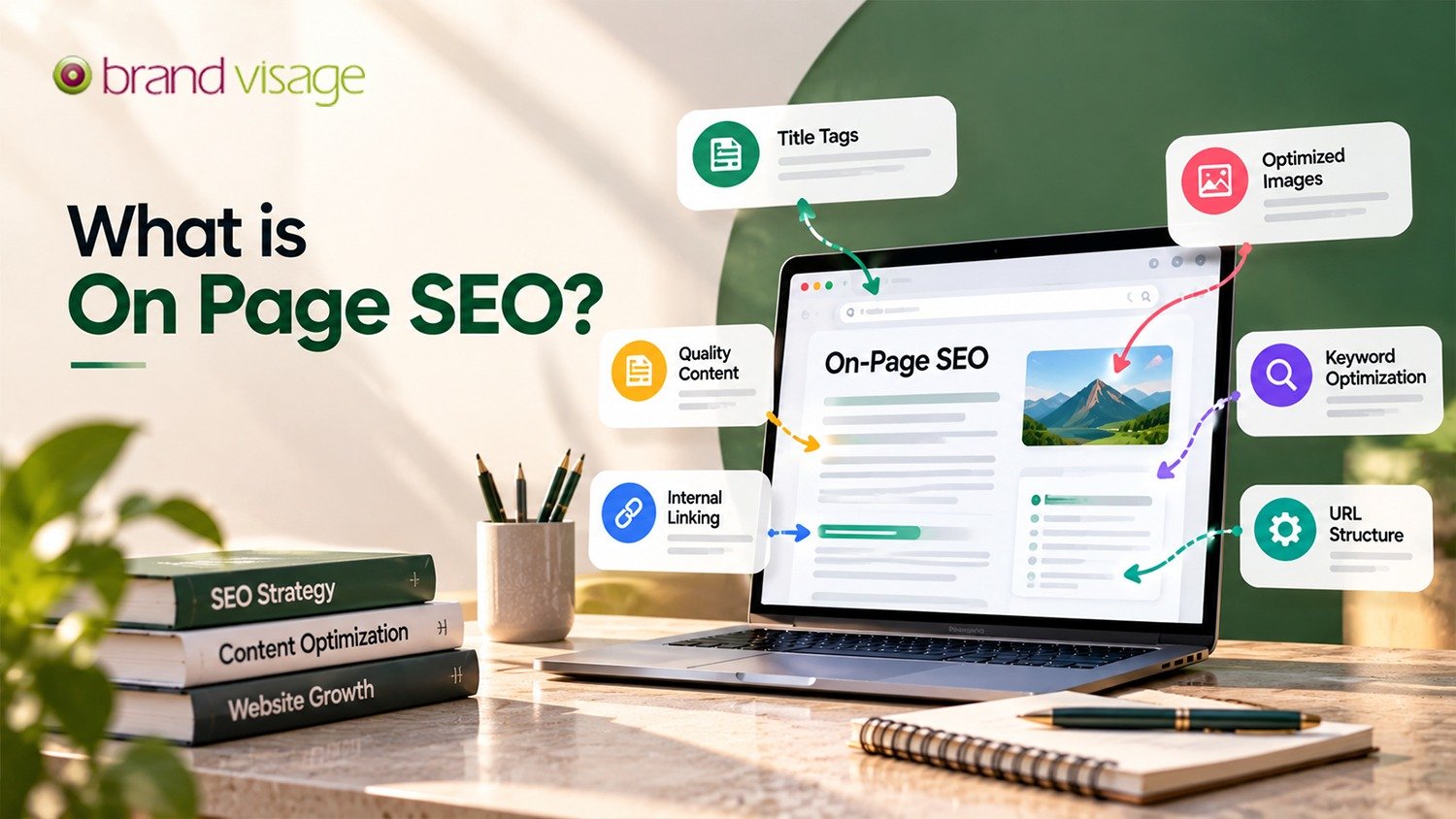
It sounds technical, but the idea is simple. On-page SEO means improving the individual pages of your website so search engines can understand them and visitors can quickly find what they need. Anything you control directly on the page, such as content, titles, headings, images, URLs, and internal links, counts as on-page optimization.
Think about your own browsing habits. When you land on a website, you want to know what the business offers, where to find key information, and whether the page answers your question. Google is trying to work out the same thing about every page it crawls.
So, what exactly should you work on? Let’s break it down.
1. Start With Your Page Content
Imagine you run a website design company. Someone lands on your homepage, but all they see is a line about delivering creative digital experiences. They still don’t know what services you offer or who you work with.
That’s a content problem.
Your website should explain your services in plain language. Tell visitors what you do, who you help, and what they can expect. Add the details that help them make a decision.
Content is the foundation of on page SEO. It needs to match what people are actually searching for, not just sound impressive.
Before writing a new page, ask yourself: if someone searches for this service, will they find the answer here? If not, fix the content before worrying about anything else on the page.
2. Choose Keywords That Fit the Page
Keywords show you how people search for information. But choosing them takes more thought than dropping popular phrases into your website.
Say you offer digital marketing services in Delhi. A page aimed at local customers should explain your services and your location. A general blog about digital marketing needs a different set of keywords.
Pick one main topic for each page. Use related search terms where they fit naturally, and avoid repeating the same phrase in every other sentence.
Good on page SEO is about relevance. A page that answers a searcher’s question clearly is more useful than one written around a keyword alone.
It also helps to check the search results before creating content. They show you what people expect to find when they search for that topic.
3. Write Better Page Titles and Headings
Your page title tells search engines and visitors what the page covers. It can also appear as the clickable headline in Google search results.
Keep it clear and specific. If the page is about website design services, say so. Avoid vague titles that could apply to almost any business.
Headings do a different job. They break the page into sections and help readers scan for what they need. Use one clear main heading (H1), followed by smaller subheadings (H2, H3) for each point. This keeps long pages easy to read.
These on page changes may seem small, but they make your website easier to understand. Just remember that Google can rewrite title links, and a good title alone won’t guarantee higher rankings.
4. Optimize Your Images
Images make a website more engaging, but they need a little attention too.
- File names: Use meaningful names instead of strings of random numbers.
- Alt text: Add descriptive alt text when an image conveys useful information. For purely decorative images, skip it.
- File size: Large images slow a page down, especially on mobile connections. Compress them without making them blurry.
For example, an image of a product should describe that product rather than use a generic label such as “image one.”
These simple on page improvements help your website load faster and make its content easier for search engines to interpret.
5. Make Your Website Easy to Navigate
Have you ever visited a website and struggled to find its contact page? It’s frustrating, especially when you’re ready to enquire about a service.
Your visitors shouldn’t have to work that hard.
Keep your navigation menu simple. Link related pages to one another where it helps the reader. For example, a blog explaining website design could link to your website development service page.
These internal links help people discover more of your content, and they give search engines useful information about how your pages relate to each other.
When reviewing your on page SEO, look at the site from a visitor’s point of view. Can someone find your services, read about your experience, and contact you without getting lost? If not, start there.
6. Check Your URLs and Meta Descriptions
A page URL should be easy to read and hint at what the page contains. You don’t need to cram every keyword into it. A short URL related to the service is usually easier to understand than one filled with unnecessary words and numbers.
Meta descriptions deserve attention too. They summarize the page and may appear below its title in search results. Write them to explain what visitors will find if they click.
Google may choose a different snippet from your page content, so a meta description isn’t guaranteed to appear exactly as written. Still, a useful one gives you a better starting point.
These details are part of on page SEO, but they shouldn’t take priority over a page that is missing important information.
7. Know When to Hire an SEO Agency
Some website changes are easy to handle yourself. Others need more time, experience, or technical knowledge.
If you’re managing several pages, publishing blogs, and trying to understand why your traffic isn’t improving, it’s hard to know where to start. This is where on page SEO services can help. Depending on your website, the work may include reviewing content, improving page titles, checking internal links, and identifying pages that need attention.
Brand Visage Communications is a digital marketing company in Delhi offering SEO and digital marketing services for businesses that want to strengthen their online presence. Working with an experienced SEO agency gives you a clear plan instead of random changes and guesswork.
Before choosing a provider, ask what it plans to improve and how it will measure progress. A useful review should explain the problems it finds in plain language, not just hand you a list of technical terms.
On page SEO isn’t a one-time task. As your services change and your website grows, some pages will need updating. The key is to focus on changes that help visitors and make your content clearer.
FAQs
1. What is on page seo?
On-page SEO is the process of optimizing individual website pages so they are easier for search engines to understand and more useful for visitors. It covers content, headings, page titles, images, URLs, meta descriptions, and internal links.
2. Why is on-page SEO important?
On-page optimization helps search engines understand what each of your pages is about. It also makes your website easier to use, which helps visitors find the information they need and take the next step.
3. What do on-page SEO services include?
On page SEO services may include keyword research, content reviews, title and heading improvements, image optimization, meta descriptions, and internal linking. The exact work depends on your website’s needs.
4. Can an seo agency improve my website rankings?
A good SEO agency can identify problems and improve your website’s on page and technical SEO. However, rankings depend on several factors, including competition, content quality, and technical performance. No agency can guarantee a particular position on Google.
5. How often should I review my on page SEO?
Review important pages regularly, especially when your services change or your content becomes outdated. You can also use Google Search Console to identify pages that may need improvement.
6. Can I do on-page SEO myself?
Yes. You can start by improving your content, writing clear page titles, checking your links, and making sure your pages work well on mobile devices. For larger websites or more complex issues, professional on-page SEO services from an SEO agency may be helpful.